
The Basics First-Time Customers Ought to Understand Regarding Godspeed Shirts 101
Prior to tossing anything into your cart, it helps to understand what the name traces back to. Godspeed is an old English expression, a fusion of «God» and «speed» in its bygone sense of «prosper» or «succeed,» customarily spoken to wish luck on a journey or a demanding endeavor. In short, that’s what godspeed means: a farewell charged with hope, not a allusion to velocity. So how does godspeed translate as a clothing statement? It’s a label constructed around that same notion of onward momentum, resilience, and subtle ambition, rendered as streetwear rather than uttered directly.
This walkthrough is put together for those about to buy their first godspeed shirt or godspeed hoodie and hope to arrive at a self-assured, well-informed decision. We’ll cover how sizing works, what to expect from the fabric, the right way to interpret product listings, and how god speed clothing pieces tend to fit into a wider wardrobe. Nothing but the practical groundwork you need before checking out, no filler included.
Where the Godspeed Title Comes From
Centuries ago, the word first appeared in written English, as early as the 16th century, used as a benediction for travelers, warriors, and anyone heading into the unknown.
Back then, setting out was a perilous undertaking, so the term held real significance — a «godspeed» sendoff signified «may this end favorably for you.»
Exactly on account of that heartfelt essence — willing someone resilience before they face a hard road ahead — the term resonates as a brand name today.
Because it grants the garment a deeper meaning beyond the fabric itself, streetwear brands tend to pull in historically-loaded terminology. Godspeed as a name conjures forward motion, growth as a person, as well as a gesture toward hardship faced with hope. Printed across a chest or embroidered on a sleeve, its purpose is to work less like a logo and more like a mantra.
Making sense of https://godspeednewyork.org/shorts-sweatpants/ this background makes a difference on a real-world level too. Buyers sometimes take it for granted – «godspeed» is merely stylistic type with no real significance -, afterward feel disconnected from the piece. Knowing the linguistic backstory gives the print meaning, which tends to make people more pleased about the acquisition and more likely to incorporate it thoughtfully into an outfit rather than dismissing it as random text on cotton.
What In fact Defines a Good Godspeed Shirt
Three core elements are typically balanced by a well-made shirt within this style group: fabric weight, print durability, and cut. Since these are design-driven pieces, how the graphic is applied counts for just as much as the shirt itself. Screen-printed graphics holds up more reliably wash after wash than plain heat-transfer vinyl, so should a listing mention how it was printed, that’s a detail worth reading rather than breezing past.
Fabric composition is the next thing worth checking. A pure-cotton shirt breathes better and softens with age, while shirts blending cotton and polyester hold their shape and stay smoother for longer. Neither fabric choice is definitively better — the better option is determined by whether you favor a worn-in, vintage look versus maintaining structure long-term. Those buying for the first time should check the material breakdown shown on the product page instead of trying to judge from images alone, since blended and 100% cotton fabrics can appear almost the same in photos.
The first place lower-cost shirts give out is the collar, sleeve hems, and side seams, where stitching is put to the test. More often than not that double-sewn hems avoid unraveling through more wash cycles than single-stitched alternatives. If you’re shopping online and can’t inspect the seams up close, look into return terms and reviews mentioning wear after multiple washesReturn policies and reviews that mention durability after repeated laundering deserve a look when you’re ordering online and can’t inspect the seams directlybecause that kind of feedback outperforms promotional text by itself.
Pay Attention to Fit: A Part Most New Buyers Miss
Across urban fashion, graphic shirts and hoodies usually be cut with a bulkier and oversized fit instead of the fitted cut common to standard basics. That’s a purposeful design choice tied to the aesthetic, not a fit mistake, so ordering your typical size the way you would for a slim-fit dress shirt can land you with something far more than expected large. Make it a habit to consult the label’s particular size chart using inch or centimeter measurements instead of relying on broad S/M/L assumptions.
The chest, body length, and sleeve measurements are the three measurements that matter most for shirts. In the case of hoodies, add shoulder width and hood height as additional checkpoints, since a loose-cut hoodie with a shallow hood will sit oddly around the neck. When you find yourself caught between two options, think about how you plan to wear the piece: layered over another shirt calls for a bit bigger size, worn as a standalone piece calls for nearer to your actual measurements.
Refund and exchange policies warrant scrutiny prior to purchase, not after. A fit misstep is more probable on your first buy from any streetwear label, precisely because you don’t yet know how that label’s cut runs. So a sizing mistake doesn’t end up as a wasted purchase, confirm how long exchanges are allowed, whether return shipping is free, and whether the item needs its original tags attached.
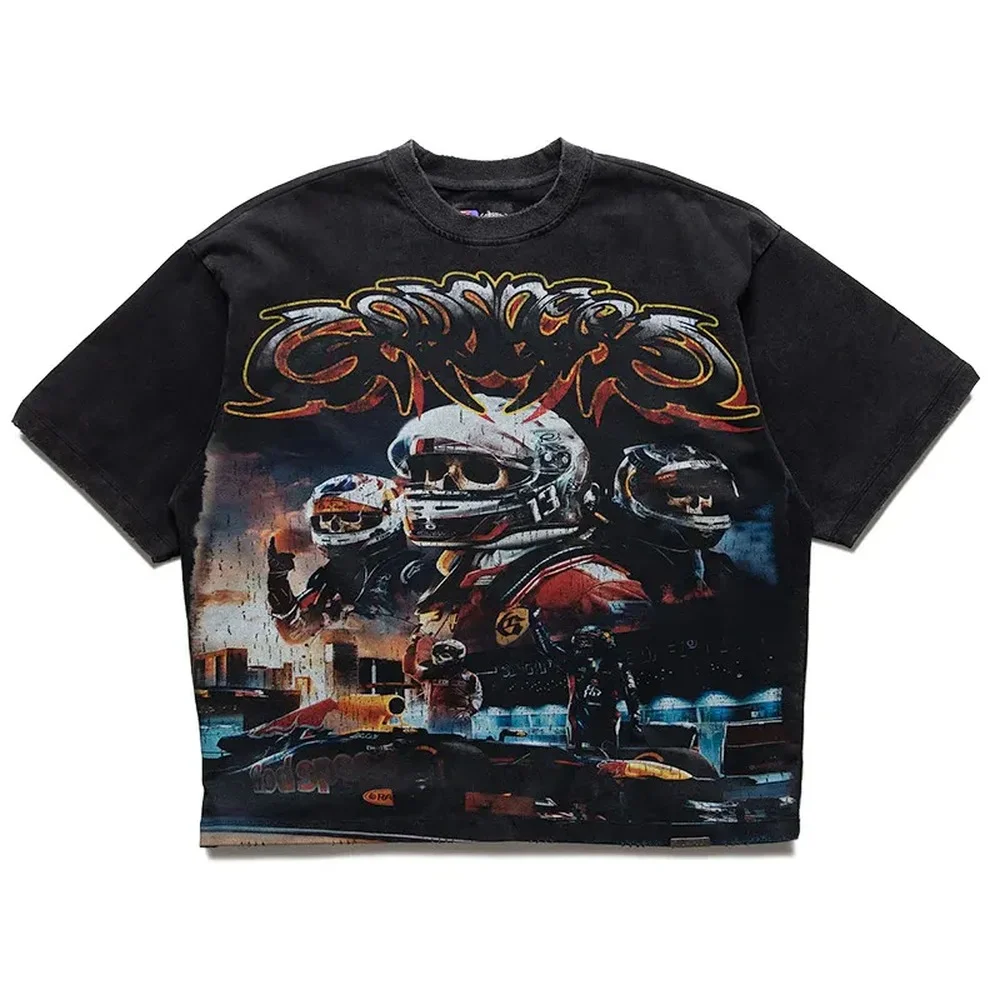
Comparing Godspeed Shirts vs. Godspeed Hoodies
Picking between a top and a hooded piece usually depends on weather conditions, layering habits, and how the print is intended to be showcased. Below, the table lays out the key distinctions customers should think through ahead of choosing between the two.
| Attribute | Godspeed Shirt | Godspeed Hoodie |
|---|---|---|
| Usual Fabric Thickness | Airier, well-ventilated cotton or a cotton blend | Heavier fleece or brushed cotton mix |
| Optimal Time of Year | Spring through early fall | Fall and winter, as well as for air-conditioned indoor wear |
| Graphic Prominence | Edge-to-edge print or embroidery plainly visible | Often a more compact front print with a bigger back graphic |
| Layering Role | Foundational piece or a standalone piece | Top layer worn atop a shirt or base layer |
| Maintenance Complexity | Straightforward, machine washable, fast drying | Extended drying duration, does better with washing turned inside out |
Your local weather plus how you plan to wear the piece decide which option makes more sense — the shirt work best for warmer regions or heavy layering, while hoodies pay off for those in colder climates who use them as a main outer layer.
Styling Godspeed Pieces Into an Daily Wardrobe
The godspeed style tends to pair well with low-key, muted bottoms so the print remains the centerpiece. Black, olive, and stone-colored joggers or straight-leg pants are popular pairings because they won’t clash with bold chest or back prints. If the shirt or hoodie graphic is minimal, you have more flexibility to introduce patterned bottoms or jacket layers without the outfit feeling cluttered.
What you put on your feet matters more than you’d think. Bulky sneakers in white or black help counterbalance an oversized silhouette, while slim, minimal sneakers can make a boxy-cut hoodie look carelessly thrown-together rather than deliberately relaxed. If you’re building an outfit around a single godspeed shirt, keep extras pared down — one chain or cap is typically enough before the look starts feeling busy.
Putting a godspeed shirt under an unbuttoned flannel or open jacket is a reliable transitional-season pairing, providing the graphic’s visibility with bonus warmth. For hoodies, a plain bomber or denim jacket over the top keeps the silhouette tailored-looking rather than baggy, particularly useful if the hoodie itself runs on the oversized side.
Looking After Your Shirt or Hoodie For the Long Haul
Printed graphics degrade fastest under direct heat and abrasion, so washing inside-out in cold water is the single best habit for prolonging print lifespan. Don’t wash these alongside bulkier garments like jeans, because zippers and rivets can snag prints during the wash cycle. Line drying or gentle-heat tumble drying preserves both the fabric structure and the graphic much more effectively than high-heat settings.
Running an iron directly across the print is one of the most common ways buyers unintentionally ruin a shirt within the early months of ownership. If ironing is necessary, do it turned inside out or place a thin cloth between the iron and the print. This single step prevents cracking or peeling on vinyl-based prints especially.
Most buyers assume storage doesn’t matter much, but it matters more than that. Folding rather than hanging thick hoodies helps avoid stretched-out shoulders over time, especially with pieces lined with fleece that hold extra bulk. Storing pieces out of direct sunlight also reduces color fading, which becomes important if you’re planning to wear a piece for several years rather than a single season.
Parting Advice Before Purchasing
Once you understand the sizing rationale, what to expect from the fabric, and the history tied to the name, purchasing a first godspeed shirt or hoodie from this line doesn’t need to be complicated. There’s real history behind the word, and this background adds meaning to a piece that might otherwise come across as merely another printed design. Pay attention to fit measurements over assumed sizing, verify the fabric composition prior to purchase, and consider the season you’ll wear it in when choosing between a shirt and a hoodie.
Since correct washing and storage can significantly lengthen a garment’s lifespan, care habits matter just as much as the initial purchase decision. Regardless of whether the appeal is the phrase’s meaning or just its look, a well-chosen piece from this category should withstand everyday use without the shape or print degrading. Spend a little extra time reviewing size charts and fabric details before you order, and the first purchase is far more likely to become a long-term wardrobe staple.